

One in three Australians will be affected by a neurological or mental health condition in their lifetime. Brain disorders are now the leading cause of ill health and disability globally. The people gathering at BrainTech 2026 are, in their different ways, trying to change that.
The foundation hiding in plain sight
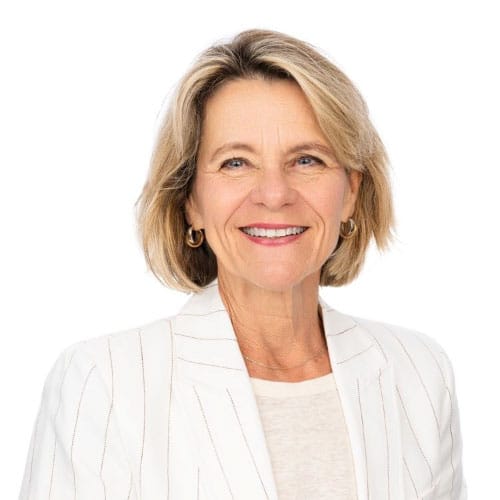 Cochlear and others that followed have created deep pools of clinical, regulatory, engineering and commercial expertise that have since flowed into the next generation of Australian braintech. One of those who carry this experience forward is Mary Beth Brinson who will be sharing her expertise at BrainTech 2026. She spent 16 years at Cochlear, rising to VP of Global Clinical Affairs and is now the CEO of Wavewise Analytics which translates continuous brain-monitoring R&D into clinical products for intensive care settings.
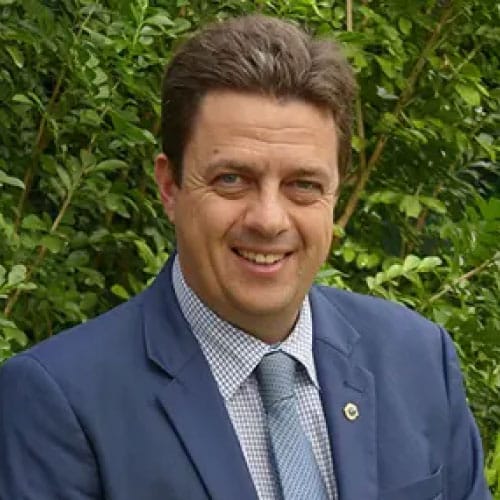 Philanthropy plays the same long game. The Clem Jones Foundation made an initial $2 million gift to the Queensland Brain Institute fifteen years ago, funding Professor Jürgen Götz and a decade of research that became the scanning ultrasound technology now licensed to Ceretas, currently in clinical trials to help people with Alzheimer’s. That same research ecosystem has since spawned EMVision Medical Devices, developing portable electromagnetic brain scanners for stroke detection. As Peter Johnstone, CEO of the Clem Jones Foundation, has said: that initial investment “has been leveraged to attract other support from the Queensland and federal governments as well as other philanthropic backing.” Peter Johnstone will be sharing on the vital role of philanthropy at BrainTech 2026.
 Professor David Grayden has worked across many neural technologies – the cochlear implant, the bionic eye, epileptic seizure prediction, brain-machine interfaces and vagus nerve stimulation. He co-founded the BioDesign Innovation program at the University of Melbourne, training engineering and business students how to innovate medical technologies. He is precious connective tissue, the kind of person who joins the dots connecting students to opportunity. He will be speaking at BrainTech 2026.
Brain health at scale
St Vincent’s Health Australia was awarded a $217 million federal contract to deliver Medicare Mental Health Check In — built on THIS WAY UP, St Vincent’s own clinically-proven digital mental health platform developed over two decades, available in ten languages and already used by 40,000 clinicians across 130 countries — with a plan to extend this free, no-referral mental health support to more than 150,000 Australians seeking help each year.
Orygen — Australia’s centre of excellence in youth mental health, and the largest concentration of youth mental health researchers in the world — secured $14 million from Wellcome in late 2025 to build an hyper-personalised, AI-adaptive platform for youth mental health care, scaling globally with UNICEF and the Telstra Foundation.
And the Australian Epilepsy Project — led by Professor Graeme Jackson at the Florey Institute was awarded a second $30 million from the Medical Research Future Fund in May 2026. The first $30 million built a world-first AI platform combining MRI imaging, genetic analysis and cognitive assessment, now connected to more than 2,100 patients and 160 neurologists across Australia. The new funding scales it nationally and extends it to other neurological and mental health conditions.
Professor Henry Brodaty AO — one of Australia’s foremost dementia researchers and 2026 NSW Senior Australian of the Year — has secured MRFF funding for Maintain Your Brain Plus, taking the world’s largest online dementia prevention trial and scaling it to 5,000 Australians across urban, regional and rural communities, using AI-driven personalisation via smartphones. His vision: “to make brain health promotion as widely recognised and accessible as campaigns like Slip, Slop, Slap.”
These are the early signals of what population-wide brain health interventions can look like. We will be talking about them at BrainTech 2026.
More than the sum of its parts
The question is whether all of this becomes more than the sum of its parts — whether the full continuum of braintech, from prevention to restoration, becomes a genuine national priority. As Professor Henry Brodaty told the National Press Club in 2025: “It’s time for a national movement for brain health, backed by research, scaled with urgency and funded to save lives and money.” We think he is right. Which is why we are gathering at BrainTech 2026. We hope you can join us.